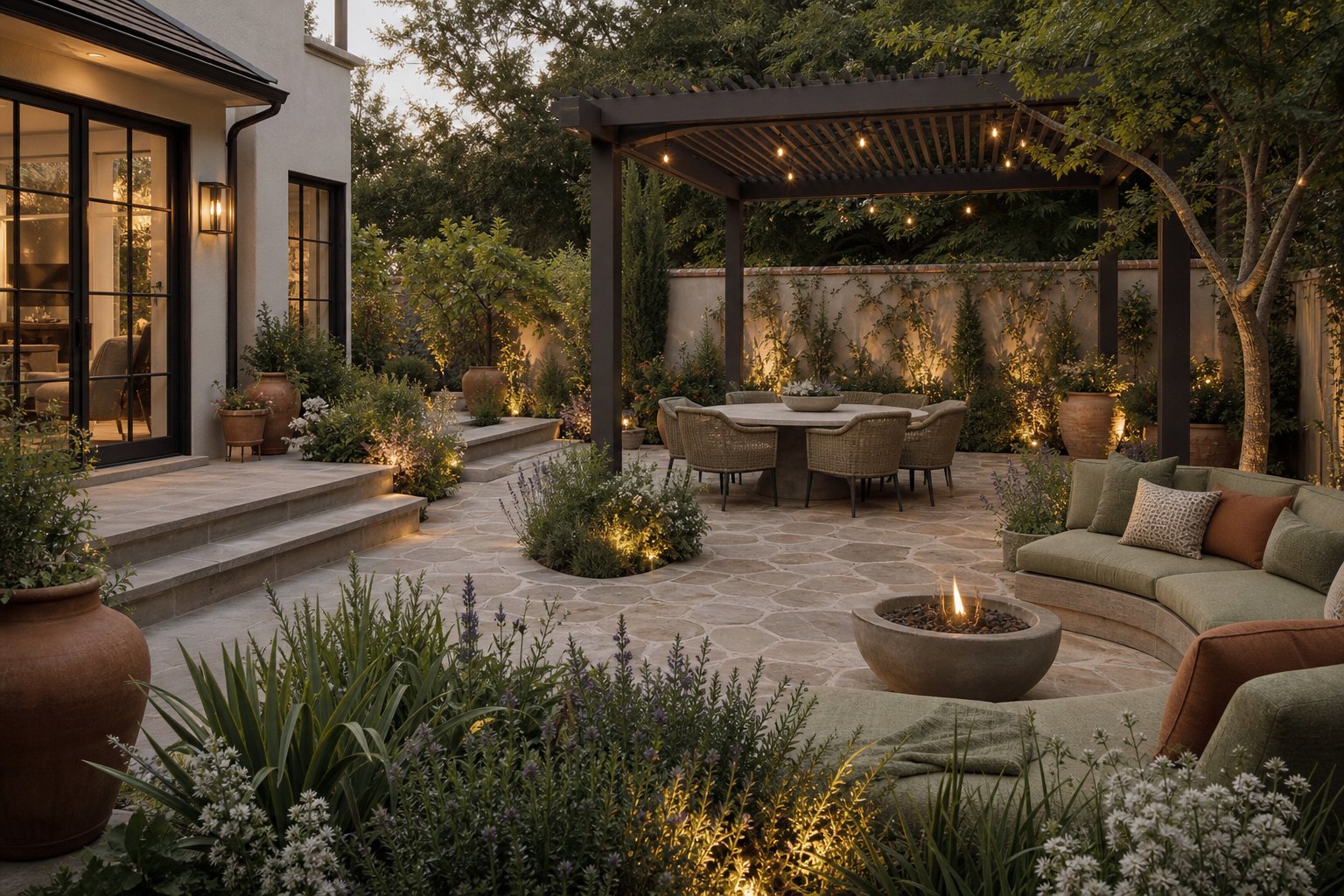
Curb appeal can sound like a performance for the neighborhood. We prefer to think of it as a gentle transition: the moment your home starts to tell you that you are almost there.
Start with the path home
Notice the approach to your front door. Does it feel easy to read, easy to walk and pleasant to arrive at? A clear path, a little planting and warm evening light can change the experience without asking the architecture to become something it is not.
Use materials that belong to the home. Natural stone, timber, painted masonry and planting with a relaxed shape usually age more gracefully than a collection of disconnected statements.
Welcoming is a feeling before it is a style.
Soften the hard edges
Gardens are at their best when they give the architecture a little breath. Layer low planting near the path, bring height around the entry and allow some greenery to soften walls, steps and boundary lines.
- Choose plants for shape and movement as well as color.
- Repeat a finish from the home in a small outdoor detail.
- Use lighting to guide, not glare.
Make the front door a quiet focal point
A door does not need to be loud to be memorable. A considered color, a beautiful handle, an honest material or a simple canopy can make the entry feel intentional. Add one or two objects that make the threshold feel cared for, then let the space stay open.
The best curb appeal is not a costume. It is the outside expression of a home that has been thoughtfully looked after.
Talk about your exterior ↗